Friday, April 23, 2010

Cases and Materials on Employment Discrimination and Employment law, 3rd (American Casebooks)

by Samuel Estreicher
This supplement updates the main casebook and the two spin-off volumes.

Thursday, April 22, 2010

The Law of Sex Discrimination

by Beth Anne Wolfson
An honest and informative book on sex discrimination and the law, THE LAW OF SEX DISCRIMINATION approaches the idea of using law to analyze sex discrimination from a variety of contexts: as an occasion for ideological disputes, as a reflection of contemporary policy debates over the future direction of society, and as part of the historical development ofร�โ€”and response toร�โ€”feminism. Fully updated for 21st century, this flexibly organized book examines topics that range from reproductive rights to global trends in gender law, and includes appendices that deal with the court system, a brief discussion of how to outline cases, and a glossary of legal and technical terms.

Wednesday, April 21, 2010

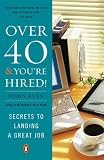
Over 40 & You're Hired!: Secrets to Landing a Great Job

by Robin Ryan
A vital new job search approach customized for people over forty- from the author of 60 Seconds & You're Hired!

With unemployment hitting all time highs, the over- forty crowd is struggling to land new jobs. America's top career counselor offers her market-tested program that shows readers how to effectively stand out and appeal to employers amid age discrimiยญnation and floods of competition.

In Over 40 & You're Hired!, Robin Ryan will inspire readers to jump-start their careers and secure new, better-paying jobs. She encourages them to tap into the "hidden job market" (where 80 percent of all jobs are found), explains how to create targeted resumes and master the interview, and outlines how to overcome any age-related stereotypes they may encounter in their job hunt. Ryan has created a guide of valuable advice and detailed explanations culled from over twenty years of experience as a career counselor that people over forty will find indispens...

Tuesday, April 20, 2010

Human Rights in the Investigation and Prosecution of Crime

by Madeleine Colvin
This new book is partly based on an earlier book, Criminal Justice, Police Powers and Human Rights (Blackstone's, 2001, life sales 1776), which was published immediately after the Human Rights Act came into force. The subsequent developments in the criminal justice/human rights field have been so numerous, that a new dedicated text on the subject is required as opposed to just a new edition of the authors' previous book.
This new book provides a detailed and practical analysis of the impact of UK human rights law on the investigation and prosecution of crime. It deals systematically with the various stages of investigation, arrest and detention in police custody, court procedure, evidence, sentencing, and appeals. The narrative provides a comprehensive, in-depth examination of the Regulation of Investigatory Powers Act (RIPA), looking in detail at the relationship between human rights and police investigatory and surveillance powers.
The book is aimed directly at prac...

Monday, April 19, 2010

Islam and Human Rights (Collected Essays in Law)

by Abdullahi An-Na'im
The relationship between Islam and human rights forms an important aspect of contemporary international human rights debates. Current international events have made the topic more relevant than ever in international law discourse. Professor Abdullahi An-Na'im is undoubtedly one of the leading international scholars on this subject. He has written extensively on the subject and his works are widely referenced in the literature. His contributions on the subject are however scattered in different academic journals and book chapters. This anthology is designed to bring together his academic contributions on the subject under one cover, for easy access for students and researchers in Islamic law and human rights.

Sunday, April 18, 2010

Textbook on International Human Rights

by Rhona K.M. Smith
Global in coverage, the fourth edition of Textbook on International Human Rights provides a concise introduction for newcomers to the subject. Beginning with a brief analysis of the development of international human rights and the history of the subject, the text gives full consideration to the work of the UN before turning in more detail to regional systems of human rights. The second half of the book looks at a variety of substantive rights, with illustrations from both regional and international law.

The strength of the book lies in its clarity and broad scope, with the focus on making the subject easily accessible to those with little or no prior knowledge. The author guides students through the complexities of each topic before providing a wealth of useful references at the end of each chapter. The fourth edition incorporates all the latest developments in the subject.

Textbook on International Human Rights continues to be relied upon by student...

Friday, April 16, 2010

Privacy: A Very Short Introduction (Very Short Introductions)

by Raymond Wacks
It is widely recognized that our privacy is under threat. Electronic surveillance, biometrics, CCTV, ID cards, RFID codes, online security, encryption, the interception of email, the monitoring of employees--all raise fundamental questions about privacy. Legal expert Raymond Wacks here provides a compact introduction to this complex and controversial concept. He explores the tension between free speech and privacy which is often tested by paparazzi, with their intrusive journalism and sensational disclosures of the private lives of celebrities. He also looks at laws in many nations that regulate the collection and use of personal information, whether highly sensitive--medical and financial information--or commonplace transactions and details about us. The protection of personal data represents a classic instance of the law's struggle to keep abreast with technology, as the information revolution has spawned problems that test the ability of the law to provide adequate protection again...

Thursday, April 15, 2010

John Marshall: Writings (Library of America)

by John Marshall
"It is emphatically the province and duty of the judicial department," John Marshall wrote in Marbury v. Madison, "to say what the law is." As its Chief Justice from 1801 to 1835, Marshall made the Supreme Court a full and equal branch of the federal government. In so doing, he joined Washington, his mentor, and Jefferson, his ideological rival, in the first rank of American founders. His legacy extends far beyond Marbury, which held for the first time that the Supreme Court has the power to declare acts of Congress unconstitutional. Under his leadership, the Court upheld the constitutionality of a national bank, established the supremacy of the federal judiciary over state courts and legislatures in matters of constitutional interpretation, and profoundly influenced the economic development of the nation through vigorous interpretation of the contract and interstate commerce clauses. His major judicial opinions are eloquent public papers, written with the conviction tha...
Wednesday, April 14, 2010

The Constitution of the United States of America, with the Bill of Rights and all of the Amendments; The Declaration of Independence; and the Articles of Confederation

by Thomas Jefferson
Collected here in one affordable volume are the most important documents of the United States of America: The Constitution of the United States of America, with the Bill of Rights and all of the Amendments; The Declaration of Independence; and the Articles of Confederation. These three documents are the basis for our entire way of life. Every citizen should have a copy.

Tuesday, April 13, 2010

Crisis and Command: A History of Executive Power from George Washington to George W. Bush

by John Yoo
An American President faces war and finds himself hamstrung by a Congress that will not act. To protect national security, he invokes his powers as Commander-in-Chief and orders actions that seem to violate laws enacted by Congress. He is excoriated for usurping dictatorial powers, placing himself above the law, and threatening to โ€�breakdown constitutional safeguards.โ€� ...

Sunday, April 11, 2010

From Disgust to Humanity: Sexual Orientation and Constitutional Law (Inalienable Rights)

by Martha C. Nussbaum
A distinguished professor of law and philosophy at the University of Chicago, a prolific writer and award-winning thinker, Martha Nussbaum stands as one of our foremost authorities on law, justice, freedom, morality, and emotion. In From Disgust to Humanity, Nussbaum aims her considerable intellectual firepower at the bulwark of opposition to gay equality: the politics of disgust.

Nussbaum argues that disgust has long been among the fundamental motivations of those who are fighting for legal discrimination against lesbian and gay citizens. When confronted with same-sex acts and relationships, she writes, they experience "a deep aversion akin to that inspired by bodily wastes, slimy insects, and spoiled food--and then cite that very reaction to justify a range of legal restrictions, from sodomy laws to bans on same-sex marriage." Leon Kass, former head of President Bush's President's Council on Bioethics, even argues that this repugnance has an inherent "wisdom," steeri...

Saturday, April 10, 2010

Civil Liberties and the Constitution: Cases and Commentaries (9th Edition)

by Lucius J. Barker
Designed for junior/senior-level courses in Civil Liberties, this time-honored text/casebook explores civil liberty problems through a study of leading judicial decisions--primarily those of the United States Supreme Court--and assesses the overall political-social context in which the formulation and implementation of civil liberties policies take place.

Friday, April 9, 2010

Privacy: A Very Short Introduction (Very Short Introductions)

by Raymond Wacks
It is widely recognized that our privacy is under threat. Electronic surveillance, biometrics, CCTV, ID cards, RFID codes, online security, encryption, the interception of email, the monitoring of employees--all raise fundamental questions about privacy. Legal expert Raymond Wacks here provides a compact introduction to this complex and controversial concept. He explores the tension between free speech and privacy which is often tested by paparazzi, with their intrusive journalism and sensational disclosures of the private lives of celebrities. He also looks at laws in many nations that regulate the collection and use of personal information, whether highly sensitive--medical and financial information--or commonplace transactions and details about us. The protection of personal data represents a classic instance of the law's struggle to keep abreast with technology, as the information revolution has spawned problems that test the ability of the law to provide adequate protection again...

Thursday, April 8, 2010

Unmerited Favor


by Joseph Prince
It is God s desire for you to succeed in every area of your life, and with His presence in your life, you can! His grace or unmerited favor can swing open doors of opportunities and place you at the right place at the right time for His blessings. Even if you lack the necessary qualifications, skills and experience, His unmerited favor can propel you forward. In Unmerited Favor you will learn about what your Savior has accomplished on the cross for you, and how, through His magnificent sacrifice, you can lead an overcoming life as God s beloved one who is greatly blessed, highly favored and deeply loved!

It s time for you to stop depending on your own efforts to succeed, and to start depending on Jesus and Jesus alone for every success. Get ready to be impacted and transformed by His passionate love for you! Chapters in Unmerited Favor include:
Becoming Safe For Success
Your Right To God s Unmerited Favor
Covenanted To Succeed In Life
The Secret To Good Succ...

William P. Homans Jr.: A Life In Court

by Mark S. Brodin
Boston lawyer William P. Homans Jr. devoted his fifty-year career to the defense of the poor and downtrodden, the protection of our most basic civil liberties, and the abolition of the death penalty. Descendant of two of Boston's oldest and most prominent families, and combat veteran of both the British and American Navies during World War II, Homans became unlikely guru to the 1960s generation of radical lawyers and antiwar activists. He was on the defense team in the 1968 conspiracy trial of Dr. Benjamin Spock and four other leading opponents of the Vietnam War accused of aiding and abetting resistance to the military draft, and represented Dr. Kenneth Edelin in the 1975 manslaughter prosecution arising out of a lawful abortion performed after Roe v. Wade. The narrative contrasts Bill Homans' storied legal career with a troubled personal life in a balanced but unvarnished manner, testifying to the strength of the human spirit when committed to the pursuit of the common good. ...